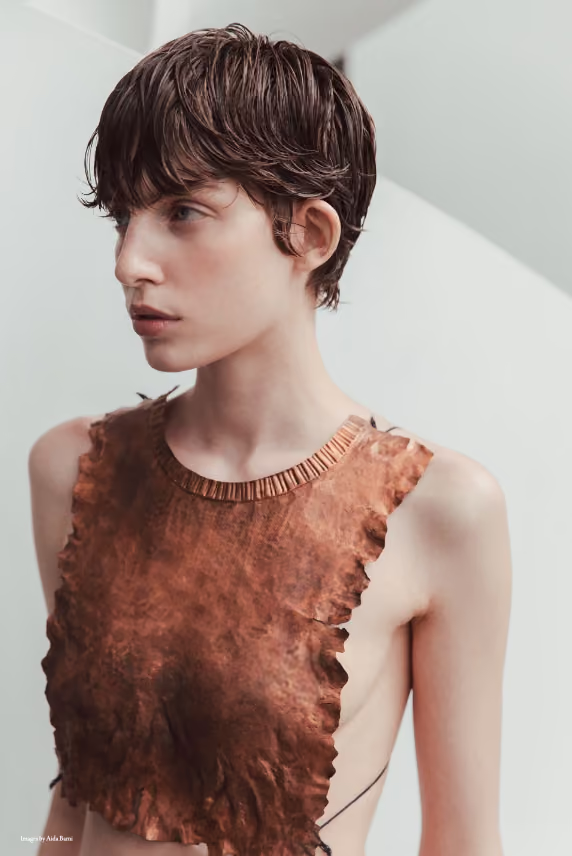
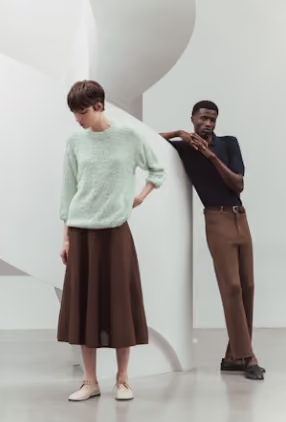
Known for its uncompromising quality and goal to always produce only the finest cashmere there is, Aida Barni is the ultimate choice for those who value timelessness and thoughtful creation. We sat down for a conversation about brand history, values, and the intimacy between a garment and its wearer.
At Aida Barni, everything begins with continuity. The relationship between Aida Barni and Pier Luigi Galli was never simply a professional partnership – besides being a couple in life, workwise it was a dialogue between creativity and technical mastery. That balance still defines the company today. Knowledge, values, and craftsmanship are not transmitted through manuals, but through daily proximity: observing, listening, understanding timing, and respecting processes.
The 1990s were a period where quality and individuality still had space to speak quietly but powerfully. Today, after years dominated by speed and excess consumption, there is a renewed desire for permanence, tactility, and emotional connection in fashion.
The relaunch came from realizing that the values the brand always believed in – timelessness, material excellence, and thoughtful creation – feel more relevant now than ever. Consumers are becoming more discerning. They want fewer pieces, but better ones. They want transparency and substance. This cultural shift made the return feel natural rather than nostalgic.
The new generation brings a different rhythm and sensitivity, especially in technology, sustainability awareness, and the relationship between fashion and culture. But the core philosophy remains untouched: respect for materials, craftsmanship, and understated elegance.
Rather than reinventing the brand, the new generation has refined how those values are expressed today. The silhouettes may feel lighter, the styling more contemporary, and the dialogue with art and design more fluid, but the essence remains deeply connected to the original vision established by the founder.
True cashmere is not defined by a label alone. It is defined by origin, fiber selection, spinning quality, construction, and longevity. Today, the word “cashmere” is often used too broadly, disconnected from the standards that once gave it meaning.
For us, true cashmere is about honesty. It should feel alive, breathable, soft without being fragile, and capable of aging beautifully over time. It is a material that deserves respect, not only because of its rarity, but because of the knowledge required to work with it properly.
Absolutely. Cashmere lives very close to the body, so it inevitably becomes emotional. People remember how a garment made them feel as much as how it looked. There is warmth, comfort, protection, and familiarity in the material.
That intimacy reflects the nature of the brand itself. Aida Barni has always approached fashion in a personal way – not through spectacle, but through quiet relationships between garment, material, and wearer. The goal is not to impress immediately, but to become indispensable over time.
Trends are temporary; expertise is cumulative. Two-ply cashmere was a cut-through innovation and was chosen because it improved durability, structure, softness, and resistance to pilling – even if it went against the traditional and common one-ply and may have appeared as a trend.
When you work closely with materials for decades, you learn to trust what the fiber tells you rather than what the market moment demands. Sometimes innovation combined with expertise is a means to move forward; other times it means defending standards that should never have been abandoned.
Art always influences the collections not through direct reference but through atmosphere, proportion, texture, and emotion. Contemporary art encourages freedom of interpretation, and that openness enters the design process naturally. Today, unlike a few decades ago, contemporary art, in its many forms, is far more present in everyday life, and has made us slightly accustomed – even unconsciously – to it.
Certain colour combinations, sculptural silhouettes, or unexpected tactile contrasts often emerge from conversations with architecture, painting, or installation art. The collections aim to feel intellectually alive while remaining wearable and timeless. They address a public that is, rather than wants to be, contemporary.
To create something lasting today means resisting disposability in every sense. Physically, it means using exceptional materials, precise construction, and timeless shapes that can endure years of use. Culturally, it means designing pieces that are not dependent on seasonal noise but that enclose a message to slowly read, interpret, and understand day by day, year after year.
A garment should continue to feel relevant because it carries integrity, not because it follows trends. Longevity is ultimately an ethical choice as much as an aesthetic one. Today, there is a renewed attention toward garments that are not simply disposable, reflecting a more conscious approach to consumption. This aligns with the company’s philosophy, which offers a repair service for its knitwear pieces, helping to extend the life of each product and making it more sustainable.
How does craftsmanship, heritage, and product quality define who you are?
They are not marketing concepts for us, they are the foundation of every decision we make. Craftsmanship defines how we work, heritage defines why we work this way, and quality defines the final relationship between the garment and the person wearing it.
At Aida Barni, quality is never only visual. It is something you recognize through touch, comfort, durability, and emotion. That philosophy has remained unchanged from the beginning and continues to define the identity of the brand today.
We believe that Melagence understands that Aida Barni is not simply a cashmere label but a cultural and emotional project rooted in craftsmanship and long-term thinking.
What made the partnership feel right was a shared sensibility. Melagence approaches fashion with curation, authenticity, and independence rather than volume or trends. They value brands with identity and depth, which aligns perfectly with the spirit of Aida Barni. The collaboration feels less transactional and more like a mutual recognition of values.
We are truly excited to welcome Aida Barni into our portfolio and wish you just as much joy discovering their newest collections with us in our showrooms.
Bekannt für kompromisslose Qualität und den Anspruch, ausschließlich feinsten Kaschmir zu verarbeiten, ist Aida Barni die erste Wahl für alle, die Zeitlosigkeit und bewusstes Schaffen schätzen. Wir haben uns zum Gespräch getroffen – über die Geschichte der Marke, ihre Werte und die Vertrautheit zwischen einem Kleidungsstück und dem Menschen, der es trägt.
Bei Aida Barni steht am Anfang von allem Kontinuität. Zwischen Aida und Pier Luigi Galli war es nie eine bloße berufliche Partnerschaft. Sie waren sowohl privat ein Paar - als auch im ständigen Dialog in der Arbeit - ein Leben zwischen Kreativität und technischer Exzellenz. Wissen, Werte und Handwerk lernt man nicht aus Büchern, sie werden im Tagtäglichen weitergegeben: durch Beobachten, durch Zuhören und den Respekt vor jedem einzelnen Schritt im Prozess.
Die Neunziger waren eine Zeit, in der Qualität und Eigenständigkeit noch leise, aber kraftvoll sprechen durften. Nach Jahren von Tempo und Übermaß wächst heute wieder das Bedürfnis nach Beständigkeit, nach Haptik, nach einer echten emotionalen Verbindung zur Mode. Der Relaunch ist aus genau jenen Werten entstanden, die für Aida Barni immer zentral waren: Zeitlosigkeit, höchste Qualität, bewusstes Erschaffen. Die Kundinnen und Kunden wollen weniger, aber besseres – Transparenz und Substanz. Dieser Wandel ließ die Rückkehr selbstverständlich wirken, nicht nostalgisch.
Die neue Generation bringt einen anderen Rhythmus mit, eine andere Sensibilität – gerade bei Technologie, Nachhaltigkeit und dem Verhältnis von Mode und Kultur. Der Kern aber bleibt unangetastet: der Respekt vor dem Material, dem Handwerk, der zurückhaltenden Eleganz. Statt die Marke neu zu erfinden, wurde sie verfeinert. Die Silhouetten wirken vielleicht leichter, das Styling zeitgemäßer – doch das Wesen bleibt eng mit der Vision der Gründerin verbunden.
Echter Kaschmir lässt sich nicht über ein Etikett definieren. Er entsteht aus Herkunft, Faserauswahl, Spinnqualität, Verarbeitung und Langlebigkeit. Heute fällt das Wort viel zu leichtfertig – losgelöst von den Standards, die ihm einst Bedeutung gegeben haben. Für uns ist echter Kaschmir vor allem eine Frage der Ehrlichkeit. Er sollte sich lebendig anfühlen, atmungsaktiv und weich sein, ohne empfindlich zu wirken, und mit den Jahren schön altern. Ein Material, das Respekt verdient – wegen seiner Seltenheit und wegen des Wissens, das man braucht, um ihm gerecht zu werden!
Unbedingt. Kaschmir liegt sehr nah am Körper und wird damit zwangsläufig emotional. Menschen erinnern sich daran, wie sich ein Kleidungsstück angefühlt hat, mindestens so sehr wie an sein Aussehen. Diese Nähe spiegelt das Wesen der Marke: Aida Barni ist der Mode immer auf persönliche Weise begegnet – nicht über Inszenierung, sondern über die stille Beziehung zwischen Kleidungsstück, Material und Trägerin. Es geht nicht darum, im ersten Moment zu beeindrucken, sondern mit der Zeit unverzichtbar zu werden.
Trends sind flüchtig, Erfahrung wächst und bleibt. Zweifädiger Kaschmir war eine wegweisende Innovation, weil er Haltbarkeit, Struktur, Weichheit und Pillingbeständigkeit verbesserte. Wer jahrzehntelang mit Materialien arbeitet, lernt, dem zu vertrauen, was die Faser sagt – nicht dem, was der Markt gerade verlangt. Manchmal heißt Innovation, voranzugehen; manchmal, Standards zu verteidigen, die man nie hätte aufgeben dürfen.
Kunst beeinflusst die Kollektionen, aber nie als direktes Zitat – sie wirkt über Atmosphäre, Proportion, Textur, Emotion. Bestimmte Farbkombinationen, skulpturale Silhouetten oder unerwartete taktile Kontraste.Aus dem Dialog von Architektur, Malerei oder Installationskunst entsteht oft ein Kontrast. Die Kollektionen sollen sich intellektuell lebendig anfühlen und zugleich tragbar und zeitlos bleiben. Sie richten sich an Menschen, die zeitgenössisch sind – nicht an solche, die es sein wollen.
Für uns bedeutet es, sich der "Wegwerf -Logik" zu widersetzen. Das bedeutet einerseits physisch: außergewöhnliche Materialien, präzise Verarbeitung, zeitlose Formen, die über Jahre tragbar bleiben, aber auch kulturell: Stücke, die nicht vom saisonalen Lärm leben, sondern eine Botschaft tragen, die sich langsam entfaltet – Tag für Tag, Jahr für Jahr. Ein Kleidungsstück bleibt relevant, weil es Integrität besitzt, nicht weil es Trends folgt. Langlebigkeit ist am Ende ebenso eine ethische wie eine ästhetische Entscheidung. Das passt zur Philosophie des Hauses. Dass einen Reparaturservice für seine Strickteile anbietet und so jedem Stück ein längeres Leben schenkt.
Das sind keine Marketingbegriffe, sondern für uns wirklich das Fundament jeder Entscheidung. Das Handwerk bestimmt, wie wir arbeiten. Das Erbe, warum wir so arbeiten. Und die Qualität entscheidet über die Beziehung zwischen dem Kleidungsstück und dem Träger. Qualität ist bei Aida Barni nie nur sichtbar – man erkennt sie an der Haptik, am Tragekomfort, an der Haltbarkeit, an der Emotion, die sie auslöst. Diese Haltung ist seit jeher unverändert.
Melagence versteht, dass Aida Barni kein reines Kaschmirlabel ist, sondern ein kulturelles und emotionales Projekt. Melagence begegnet der Mode mit Kuratierung, Authentizität und Unabhängigkeit – nicht mit Volumen, nicht mit Trends. Sie schätzen Marken mit Identität und Tiefe, und das passt perfekt zum Geist von Aida Barni. Die Zusammenarbeit fühlt sich weniger nach einem Geschäft an als nach einem gegenseitigen Anerkennen von Werten an.
Wir freuen uns sehr, Aida Barni in unserem Portfolio willkommen zu heißen – und wünschen allen viel Freude daran, diese besondere Kollektion bei uns im Showroom zu entdecken.